
Introduction
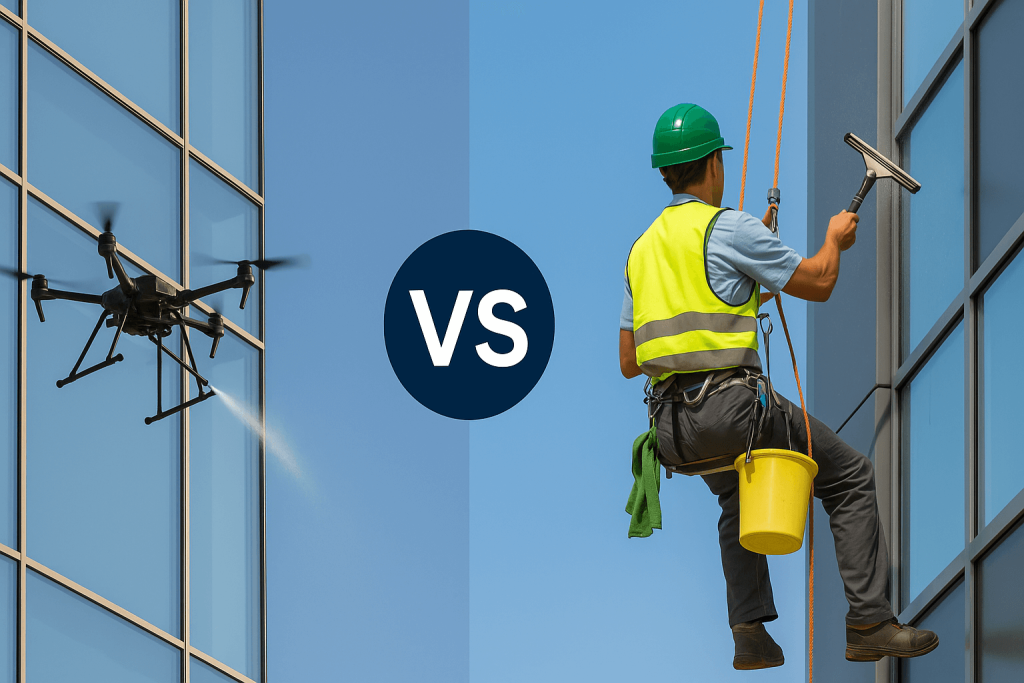
In Kenya’s growing skyline, the need for high-rise maintenance has never been greater. But how cleaning is done makes all the difference. Traditional rope-access methods pose high risks, while drone-based cleaning offers a safer, faster, and often more economical alternative.
This post provides a clear cost and safety comparison between drone cleaning and traditional techniques — essential knowledge for every commercial property manager in Kenya today.
| Factor | Traditional Rope Access | Drone Cleaning |
| Fall Risk | High – human workers suspended at heights | None – no human elevation required |
| Weather Exposure | Yes – workers vulnerable to wind/rain | Drones operate or reschedule safely |
| Worker Fatigue | Common on multi-hour jobs | Not applicable |
| Regulatory Burden | Requires strict permits, supervision | Simplified, compliant with KCAA |
| Insurance Liability | High premiums for high-risk labor | Lower premiums with automated systems |
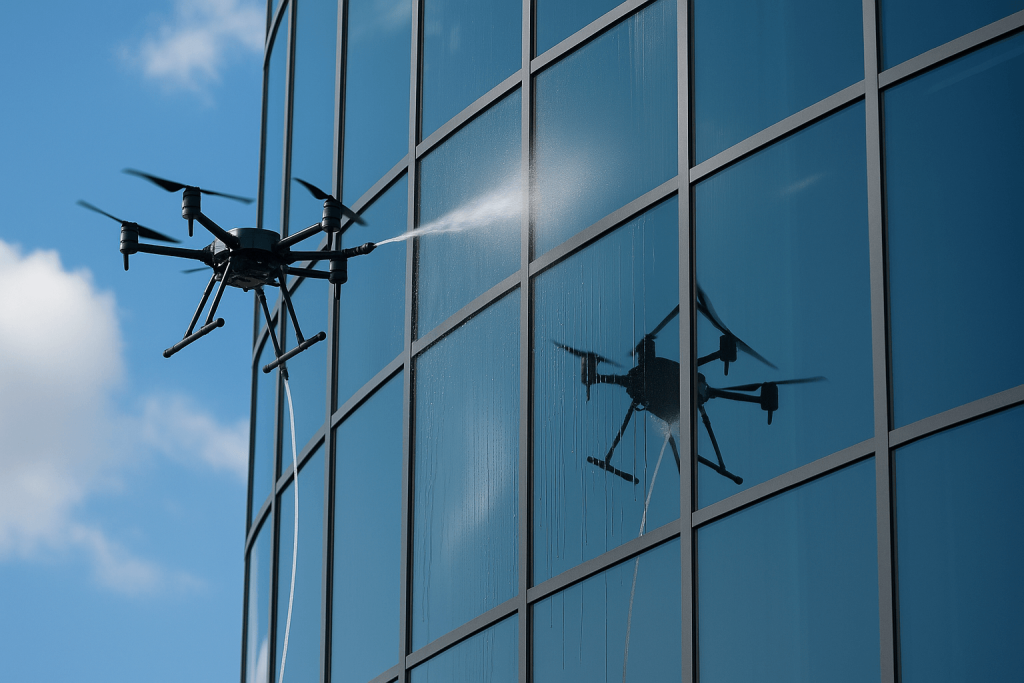
Verdict: Drone cleaning removes the life-threatening risk associated with rope access, reduces your legal liability, and aligns with global best practices for safety in building maintenance.
Cost Breakdown: Efficiency That Impacts Your Bottom Line
| Item | Rope Access | Drone Cleaning |
| Labour | 4–6 technicians | 2 operators |
| Setup Time | 2–4 hours for scaffolding/ropes | 30 – 60 minutes prep |
| Cleaning Duration | 8 – 12 hours | 3 – 5 hours |
| Permits & Equipment | High (scaffold rental, PPE, anchor checks) | Low (one-time drone ops clearance) |
| Disruption to Tenants | Moderate to high | Minimal (quieter, faster ops) |
Typical Cost Range (Nairobi High-Rise):
- Rope Access Cleaning: KES 90,000–220,000
- Drone Cleaning: KES 60,000–150,000 (varies by height, complexity)
Savings Potential: Up to 35–45% per clean, with less disruption to business operations.
Environmental & Operational Impact
- Water Usage: Drone systems use up to 90% less water through controlled spraying.
- Chemical Use: Drones often clean without harsh detergents, protecting both surfaces and ecosystems.
- Downtime: Faster cleaning means more frequent maintenance cycles, extending glass lifespan and property aesthetics.
Long-Term ROI & Strategic Value
| Benefit | Drone Advantage |
| More Frequent Cleaning | Easier scheduling, even during operational hours |
| Improved Tenant Satisfaction | Less noise, no blocked access, professional image |
| Asset Longevity | Glass and cladding last longer with non-abrasive, regular cleaning |
| Reputation & Sustainability | Aligns with ESG goals and modern building practices |
Conclusion: Rethink the Old Ways
Drone cleaning is not just a trend — it’s a smarter strategy for commercial property care in modern Kenya. With lower costs, no safety risks, and faster execution, drones are becoming the preferred choice for forward-thinking facility managers.
Stop Paying for Risky, Outdated Methods.
See the difference yourself. Request a free site assessment or schedule a live drone cleaning demo today.